
The perils of oversimplification
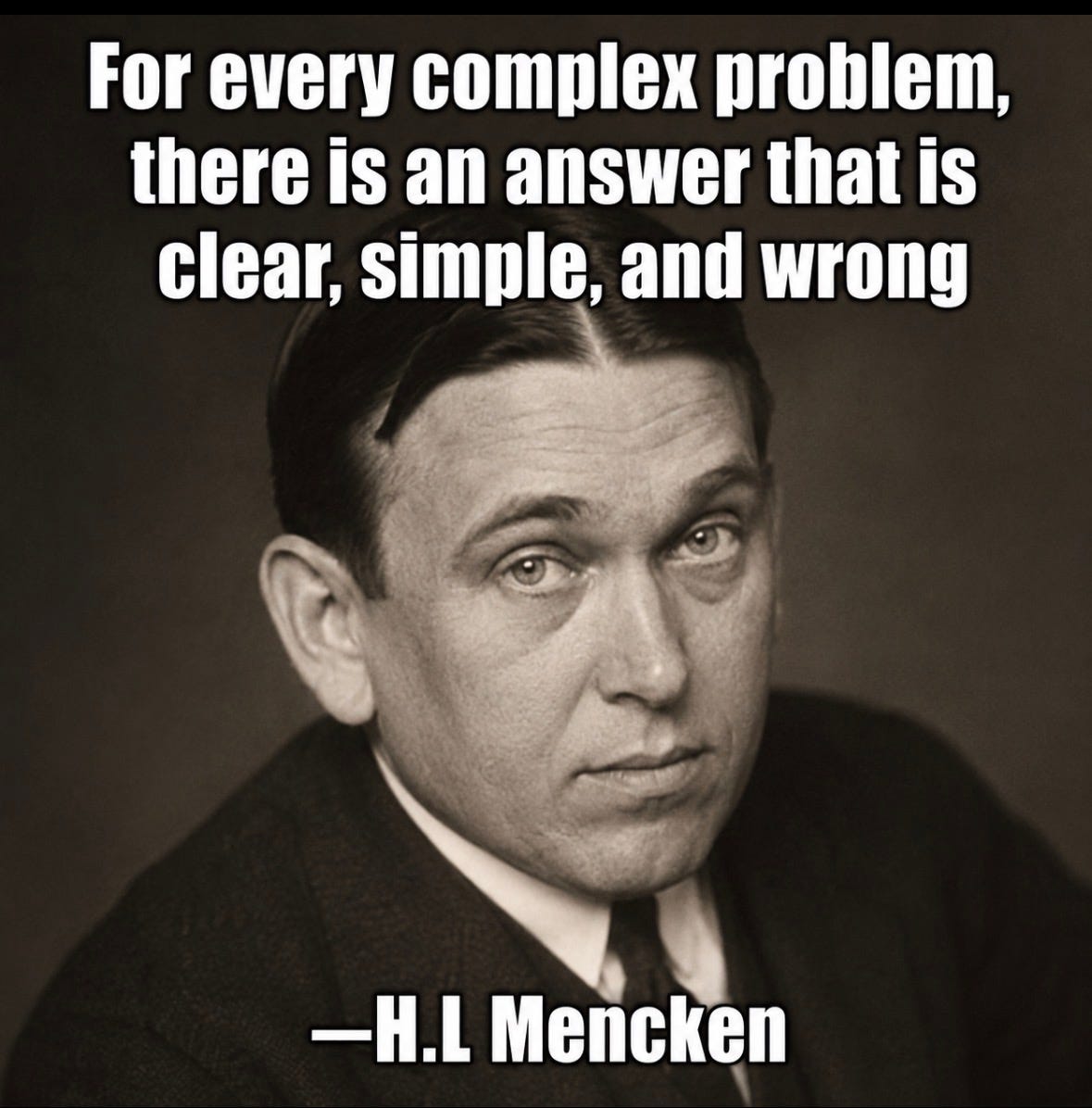
For every complex problem, there is an answer that is clear, simple, and wrong"—H.L Mencken

We like to think of the Middle East and the faiths that define it as a neat, simple trio: Judaism, Christianity, and Islam. We watch the news, look at a map, and expect a straightforward story of borders, nations, and majorities.
But in reality, digging into the region's history and politics is like opening a Russian nesting doll. Every time you pull one layer apart, you discover a bewildering substrata of sub-sects, legal schools, and ethnic divisions underneath.
Take the Kurds, for example. Today, they are a massive geopolitical factor, a population of 30 to 45 million people trapped across four different nation-states—Turkey, Iraq, Iran, and Syria. They are unhappy with their borders, and the governments around them remain perpetually unhappy with them. Western powers often view the Kurds monolithically, occasionally trying to use them as a strategic weapon or a proxy against regional adversaries like Iran. Yet, few stop to ask how this issue came to be.
The truth is, one of the greatest tragedies of the modern world was the Ottoman Empire’s decision to align with Germany and Austria-Hungary in World War I. When they lost, the empire collapsed, and European powers stepped in to ruthlessly divvy up the spoils.
The Naiveté of the Mapmakers
The British and French were profoundly naive about the region's internal dynamics. In 1916, two diplomats—Mark Sykes and François Georges-Picot—sat in a room and drew literal straight lines across a map of the Levant. The resulting Sykes-Picot Agreement ignored centuries of tribal, linguistic, and religious realities.
Before this, the Treaty of Sèvres (1920) had initially promised the Kurds a referendum for an independent state. But as the geopolitical winds shifted and modern Turkey emerged, Western powers abandoned that promise in the Treaty of Lausanne (1923). They erased the idea of Kurdistan, leaving tens of millions of people stranded as minorities in newly manufactured countries.
The Ottomans, by contrast, actually knew how to handle this diversity for centuries—perhaps because they shared a common Islamic bond, or perhaps because they understood the terrain. Instead of forcing a rigid, uniform grid over everyone, they used a highly decentralized system of indirect rule. For 300 years, they granted Kurdish tribal chieftains official autonomous hereditary districts (Yurtluk ve Ocaklık) and independent governments (Hükümet) that were exempt from regular imperial taxes and central bureaucracy. It was only when the Ottomans tried to centralize control in the 19th century that the system fractured.
The Endless Fracturing of Faith
When you look closely at the broader religious landscape, you realize this pattern of endless fracturing isn't unique to the Kurds or to Islam. It is a universal human reality across all three Abrahamic faiths, creating a staggering internal matrix:
Islam: Far from being a single monolith, the faith immediately split after the Prophet Muhammad's death over political leadership. This created SunniIslam (which further divided into four distinct legal schools like the Hanafi and Shafi'i) and Shia Islam (which fractured into the Twelver, Ismaili, and Zaydi sects based on lines of spiritual Imams), alongside independent branches like Ibadi Islam and mystical traditions like Sufism.
Christianity: While it held together longer, it eventually split into Catholicism and Eastern Orthodoxy over papal authority, before the Protestant Reformation exploded the faith into an estimated 45,000 distinct, independent denominations globally, ranging from traditional Lutherans to insular Anabaptists.
Judaism: It divides not over what to believe, but how to practice—separating into Orthodox, Conservative, and Reform movements. Simultaneously, centuries of geographic isolation split the Jewish people into entirely distinct cultural and ethnic subgroups, most notably the Ashkenazi Jews of Central and Eastern Europe, who developed their own language (Yiddish), food, and traditions separate from their Sephardic and Mizrahi cousins.
A Mirror Image of Division
To understand the complexity, it helps to compare these splits. The Sunni-Shia divide in Islam is often compared to the Protestant-Catholic divide in Christianity, but they are fundamentally inverted.
The Christian split was profoundly theological—a massive debate over religious authority, church tradition, and how a person achieves salvation. The Islamic split, at its core, was political—a dispute over succession, governance, and who had the rightful lineage to lead the community. Yet both resulted in centuries of distinct legal traditions, cultural identities, and bloody regional conflicts.
The Illusion of Simplicity
During his presidency, Donald Trump famously—and perhaps infamously—commented on the American legislative quagmire by saying, "Nobody knew healthcare could be so complicated."
You have to give Trump credit for being willing to look at a massive, broken system and try to tackle a deeply complicated issue. But his realization captured a fundamental flaw in the American political psyche. Like many American politicians before and after him, there is a persistent tendency to think that incredibly deep, historical problems are actually simple. We convince ourselves that if we just apply enough willpower, business acumen, or military might, we can get it done quickly and move on.
Then, we find out that it is bewilderingly, agonizingly complex.
We ran into the same trap during the Cold War. In our global fight against communism, American leadership viewed the world through a rigid, binary lens. We treated global communism as a single, uniform monster, completely blind to the deep-seated local histories, nationalist desires, and anti-colonial struggles on the ground. We thought we could step into Vietnam, apply a quick fix, and stop the dominoes from falling. Instead, we walked directly into a buzzsaw of centuries-old regional dynamics that we simply did not understand.
Healthcare is complicated. Vietnam was complicated. But when you peel back the layers of religion, ethnicity, and colonial map-making, you realize the Middle East is bizarrely and tragically complicated. We need to recognize and respect that, preferably before we get ourselves snared in such tangled webs.
If you like what I write, please subscribe if you have not already.
If you're a free subscriber, please consider upgrading to paid.
If you’re a paid subscriber, thank you very much! Please comment.
No matter where you fall in the subscriber matrix, please share this with your social networks and email it to anybody that you think would benefit.
If you liked it, please tell Substack by clicking the little heart button below left.
All this helps get the message out to more people and also enables me to be able to earn my daily bread by writing
.
I think most conservatives, by the nature of their conservatism, understand that things are complicated and pie in the sky solutions are often just that. It is generally the left that believes in overturning existing order, tradition or whatever for some simple answer, be it Communism or just eating the rich or the Affordable Care Act. Unfortunately Trump and his band are not conservative by any serious definition. Thus Trump remains permanently wedded to the belief that everything can be resolved with a "deal". Nothing is more profoundly wrong than this belief.
The entire American Constitution is predicated on the belief that 1. There are no simple answers to life's problems and 2. There is no one singularly qualified to decide what those answers should be. This is obviously anathema to the left as well as the Trumpian right.
Health only became complicated when medicine shifted into embracing the concept that only profitable, patentable and proprietary solutions to health issue are the answer. All other solutions became discarded and discredited.